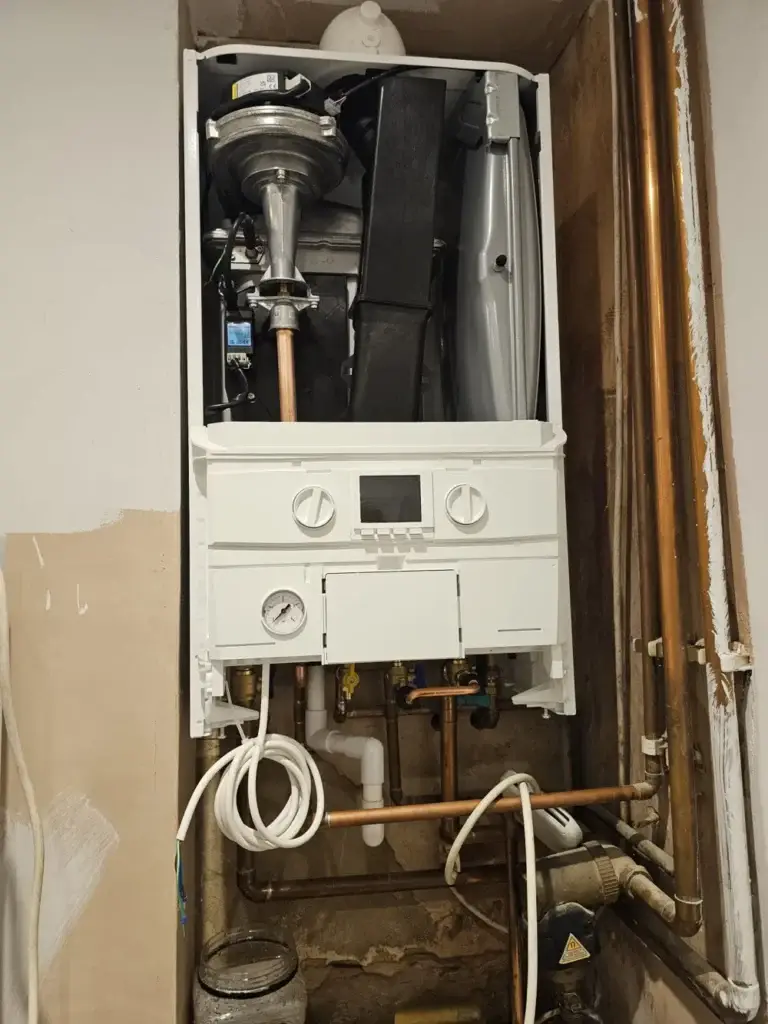
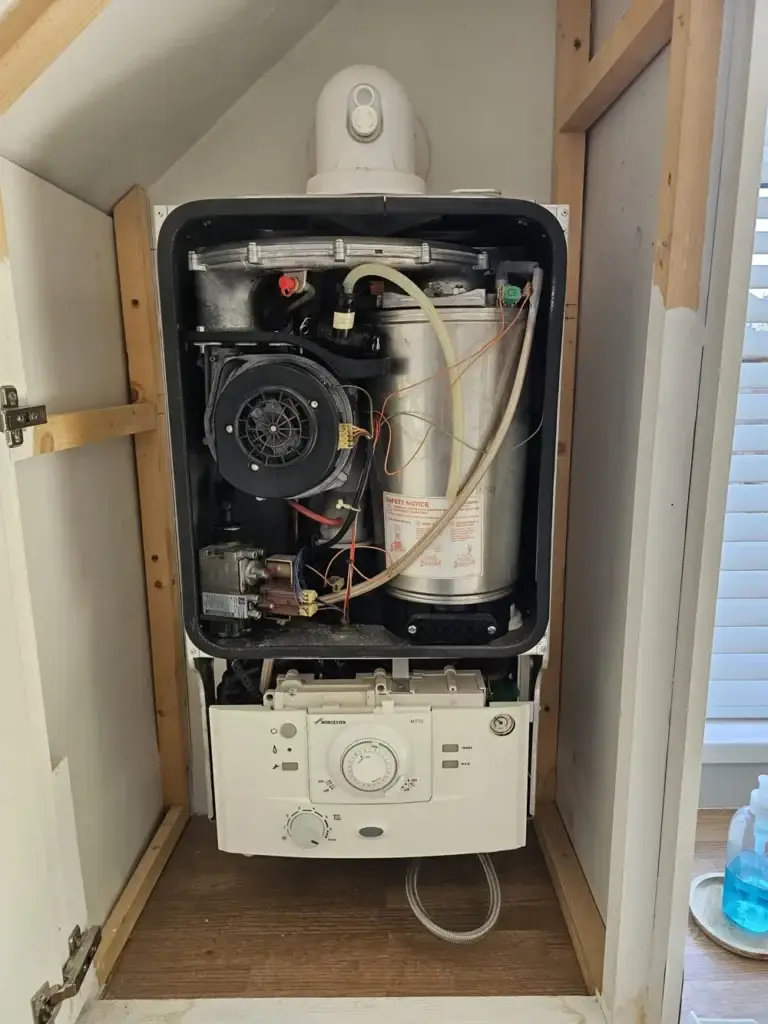
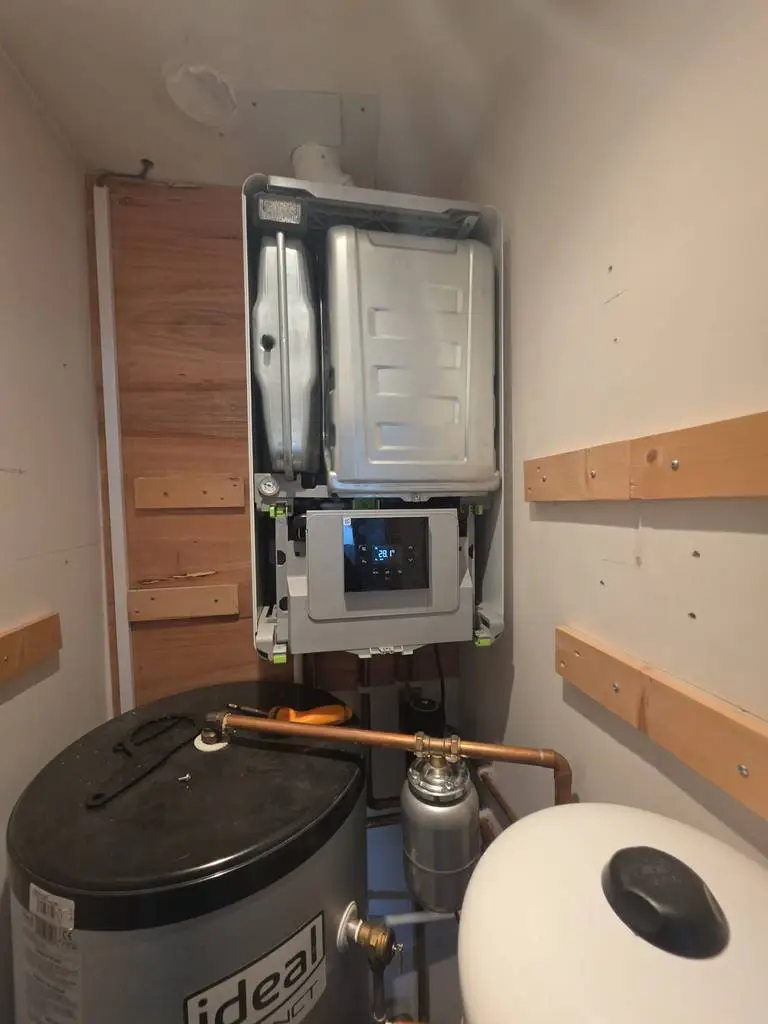
At a Glance: Boiler Pressure Essentials
Low boiler pressure is one of the most common reasons central heating systems shut down across Hull and East Riding. If your boiler displays an error code (such as F1 on Ideal boilers, EA on Worcester Bosch, or F22 on Vaillant) or fails to produce heating and hot water, your system pressure has likely fallen below operating safety thresholds.
1. What Causes a Boiler to Lose Pressure?
A sealed central heating system relies on a closed loop of pressurised water. If water escapes or the internal expansion cushion degrades, pressure drops naturally. The four primary causes are:
💨 1. Bleeding Radiators
Releasing trapped air from radiator bleed points lets air out, which naturally lowers the overall volume and water pressure in the sealed circuit.
💧 2. Pinhole Leaks in System Pipework
Even tiny water leaks from radiator valves, soldered copper joints, or underfloor pipes allow water to weep out slowly over days and weeks.
🚰 3. Pressure Relief Valve (PRV) Discharging
If the boiler over-pressurises when hot, the 3-bar safety valve opens to dump excess water outside through the copper blow-off pipe.
🎈 4. Faulty or Depressurised Expansion Vessel
The internal rubber diaphragm absorbs thermal expansion. If it loses its air charge, pressure spikes rapidly when heating turns on and plunges when cold.
2. What to Look For (Signs of Low Pressure)
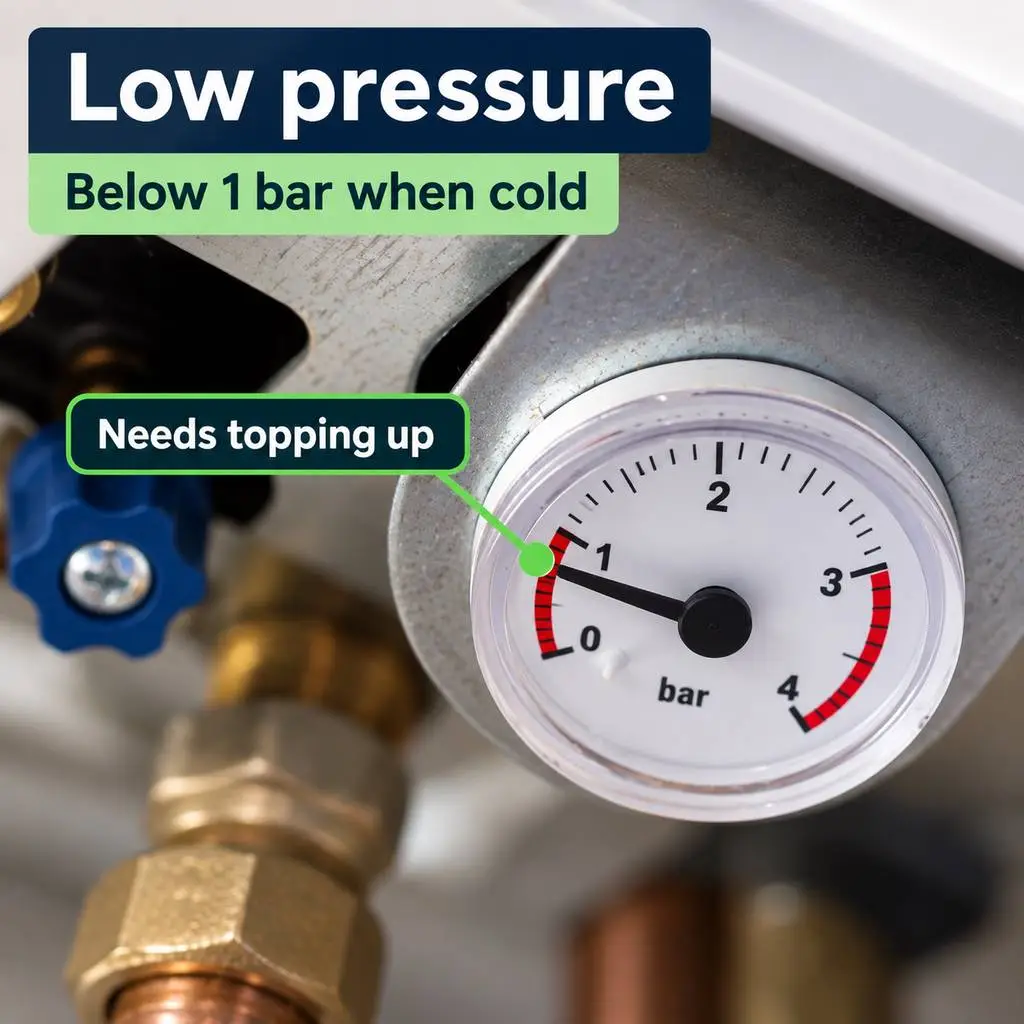
- Pressure Gauge Needle Below 1 Bar: The circular dial on the boiler drops into the lower red section (often reading between 0.0 and 0.7 bar).
- Digital Error Messages: Flashing fault codes on your control panel (e.g. F1 on Ideal Logic/Vogue, F22 on Vaillant, 108 / 111 on Baxi).
- No Hot Water or Cold Radiators: Built-in low-pressure switches prevent the gas burner from lighting to protect internal heat exchangers from overheating.
- Dripping External Copper Pipe: Signs of water dripping from the small copper pipe exiting your external wall.
3. Step-by-Step: How to Top Up Your Boiler Pressure
Step 3: Monitor Gauge & Close Taps at 1.5 Bar
Watch the pressure dial needle rise smoothly. As soon as it reaches 1.2 to 1.5 bar, turn both valve taps firmly back to the closed (perpendicular) position.
Once closed, turn the boiler power back on. The low-pressure fault code will clear, and your boiler will fire up normally.
4. What If You Can’t Fix It or Pressure Keeps Dropping?
Topping up your boiler once or twice a year (especially after bleeding radiators) is completely normal. However, if any of the following apply, you have an underlying fault requiring a certified heating engineer:
- Pressure Drops Every Few Days or Weeks: Indicates a hidden pipe leak beneath floorboards, behind plasterwork, or on radiator valves.
- Pressure Rises High (Above 2.5–3.0 Bar) When Heating Is On: Signals that the expansion vessel has failed, lost its internal nitrogen cushion, or the filling loop is letting water pass.
- Water Continuously Dripping Outside: The pressure relief valve seal has failed or has dirt trapped on the valve seat.
- Filling Loop Levers Are Stiff or Seized: Never force plastic or brass valve levers with heavy tools, as they can snap and cause a mains water flood.
Need Help With Boiler Pressure in Hull?
If your boiler repeatedly loses pressure, over-pressurises, or displays persistent fault codes, our Gas Safe registered engineers in Hull & East Riding provide fast, reliable diagnostics.